
Portfolio performance · UAE · 8 min read
Property Management KPIs in the UAE: What Every PMC Should Track
Managing a property portfolio is not just about collecting rent, maintaining buildings and keeping tenants happy. It is about understanding how well those operations are performing.
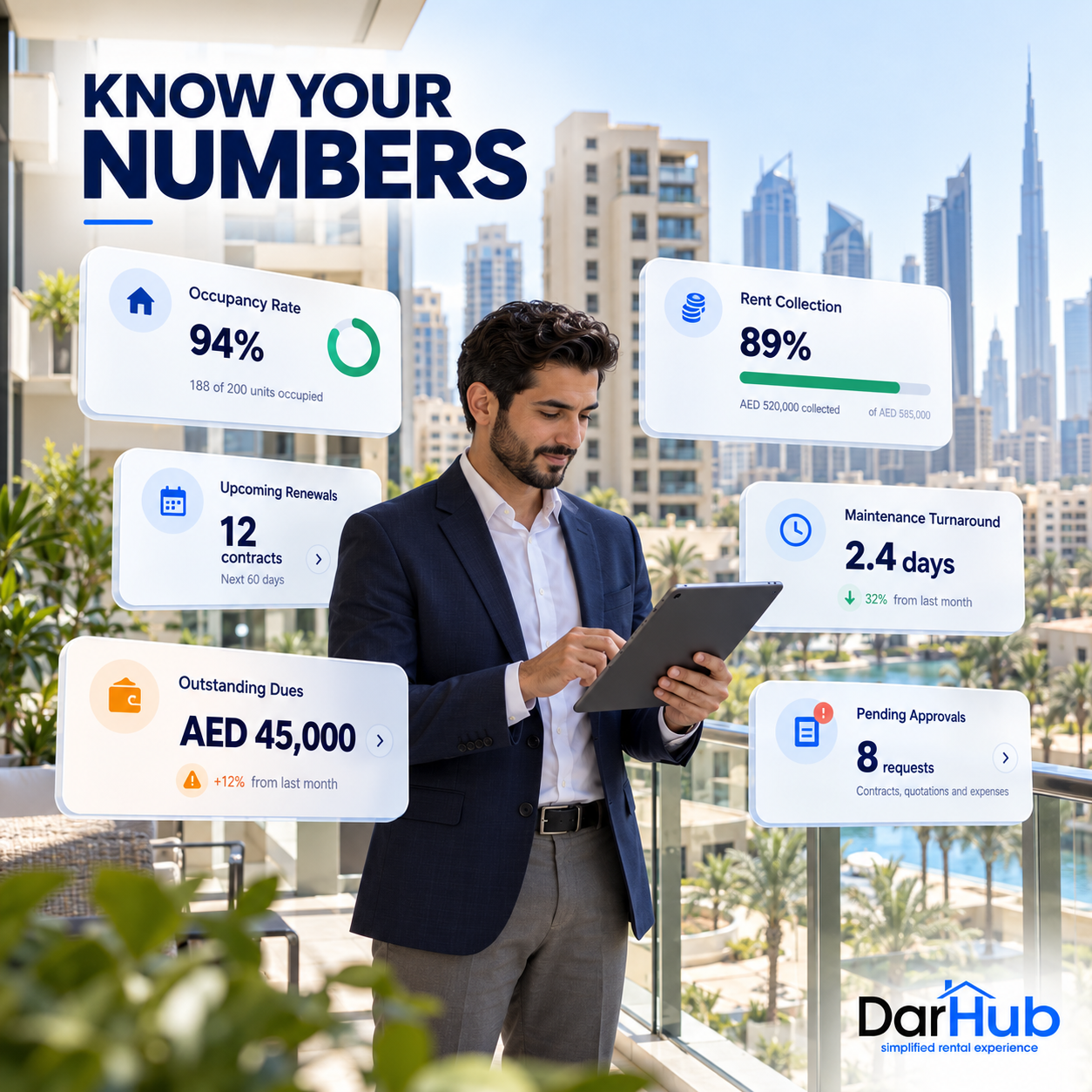
For property management companies (PMCs) in the UAE, every lease renewal, maintenance request, rent payment and landlord payout generates valuable information. The challenge is knowing which numbers matter.
Tracking the right property management KPIs in the UAE helps teams identify problems early, improve operational efficiency and make better decisions across their portfolios.
1. Occupancy rate and vacancy days
Occupancy is one of the most important indicators of rental portfolio performance. Two metrics deserve particular attention:
- Occupancy rate: The percentage of rentable units currently occupied.
- Vacancy days: The number of days a unit remains vacant between tenancies.
A property may have a strong occupancy rate but still experience unnecessary income loss when vacant units take too long to become rent-ready. Tracking vacancy days alongside occupancy helps property managers identify delays in inspections, repairs, cleaning, marketing and tenant onboarding.
What it reveals: How effectively the portfolio maintains occupancy and how efficiently vacant units return to the rental market.
2. Rent collection rate and outstanding dues
Rent collection is more than knowing how much money entered the bank account. Property managers should monitor:
- Rent collection rate: Rent collected compared with rent due during a defined period.
- Outstanding dues: Unpaid rental amounts that remain collectible.
- Overdue payments: Amounts that have passed their payment due dates.
In the UAE, where rental schedules may involve post-dated cheques, it is particularly important to distinguish between cheques received, cheques deposited and payments actually cleared. These metrics help accounts teams prioritize collections, identify overdue accounts and maintain more accurate financial records. For a closer look at cheque-level records and replacements, read our guide to rent cheque management in Dubai.
What it reveals: Collection performance, payment delays and potential cash flow pressure.
3. Lease renewal rate
Every tenancy contract has an expiry date, making renewals one of the most predictable events in property management. The lease renewal rate measures the percentage of eligible expiring tenancies that successfully renew within a defined period.
However, tracking the final outcome alone is not enough. Property managers should also monitor upcoming expiries over the next 30, 60 and 90 days, along with renewal decisions that remain pending.
A low renewal rate may indicate issues with pricing, property condition, tenant experience or the renewal process itself.
What it reveals: Tenant retention performance and potential future vacancies.
4. Maintenance turnaround time
Maintenance performance has a direct impact on tenant experience and property operations. One useful KPI is Average Maintenance Turnaround Time, which measures how long it takes to complete a maintenance request.
Teams should also distinguish between initial response time and final resolution time. Acknowledging a tenant's AC complaint within an hour is positive. But if the repair takes several days without clear communication, the overall experience may still be poor.
Tracking turnaround times by property, issue type and vendor helps identify recurring delays.
What it reveals: Maintenance efficiency, vendor performance and operational bottlenecks.
5. Reopened maintenance requests
Closing a maintenance request does not always mean the problem has been resolved. A reopened request occurs when an issue previously marked as completed requires further attention.
Tracking the percentage of completed requests that are subsequently reopened helps property managers identify recurring problems, incomplete repairs or potential service quality issues. A high reopening rate for a particular vendor or building may justify further investigation.
What it reveals: Repair quality and whether maintenance issues are being resolved effectively.
6. Approval delays
Property management involves multiple approvals, including maintenance quotations, landlord decisions and contract-related requests. When approvals are delayed, the entire workflow can slow down.
Tracking the average time requests spend awaiting approval helps identify where work is getting stuck. For example, a maintenance vendor may be ready to begin repairs, but the quotation remains pending landlord approval.
Without visibility into approval delays, the issue may incorrectly appear to be a vendor performance problem.
What it reveals: Where operational decisions are slowing down service delivery.
7. Property expenses and landlord payouts
A property's financial performance cannot be understood through rental income alone. Property managers should also monitor:
- Property expenses: Maintenance and other costs associated with each property.
- Expense-to-rent ratio: Property expenses compared with rental income over the same period.
- Landlord payouts: Amounts payable and amounts actually transferred to landlords.
- Pending payouts: Approved landlord payments that remain unsettled.
These metrics help teams identify properties with unusually high expenses, maintain clearer landlord statements and improve financial transparency.
What it reveals: Property-level financial performance and the efficiency of landlord financial settlements.
Turning property management KPIs into better decisions
Tracking KPIs is only useful when the information leads to action. For example:
- Rising vacancy days may indicate delays in preparing units for new tenants.
- Increasing outstanding dues may require earlier payment follow-ups.
- Falling renewal rates may suggest a need to review tenant experience.
- High maintenance turnaround times may highlight vendor capacity issues.
- Frequent reopened requests may reveal recurring building problems.
Rather than reviewing numbers in isolation, property managers should compare performance over time and across properties. This helps teams understand not only what happened, but why it happened and what needs attention next.
How DarHub supports data-driven property management
DarHub brings rental operations, including contracts, payments, maintenance, inspections and reporting, into one centralized property management platform.
By keeping operational records connected, property managers can maintain better visibility across their portfolios and reduce the effort required to understand day-to-day performance.
The long-term value of property management technology is not simply generating more reports. It is helping teams recognize patterns, prioritize work and make informed decisions.
Final thoughts
Good property management is not measured by how many tasks a team completes. It is measured by how effectively those tasks contribute to stronger rental operations, better tenant experiences and improved property performance.
For PMCs in the UAE, tracking the right KPIs creates a clearer picture of what is working and what needs improvement. The goal is not more data. It is better decisions.
Explore how property management software for PMCs can support connected operations.
Frequently asked questions
What are the most important property management KPIs?
Important KPIs include occupancy rate, vacancy days, rent collection rate, outstanding dues, lease renewal rate, maintenance turnaround time and property expenses.
How do you calculate occupancy rate?
Divide the number of occupied rentable units by the total number of rentable units, then multiply by 100. For example, 90 occupied units out of 100 rentable units gives a 90% occupancy rate.
Why should property managers track maintenance KPIs?
Maintenance KPIs help teams identify slow response times, recurring issues, vendor performance problems and delays that may affect tenant satisfaction.
How can property management software improve KPI tracking?
By connecting rental operations, payment records, maintenance requests and reporting, software can reduce manual data collection and make portfolio performance easier to review.
Make portfolio performance easier to review
See how DarHub connects rental operations and reporting for property management teams in the UAE.
Book a DarHub demo ↗